
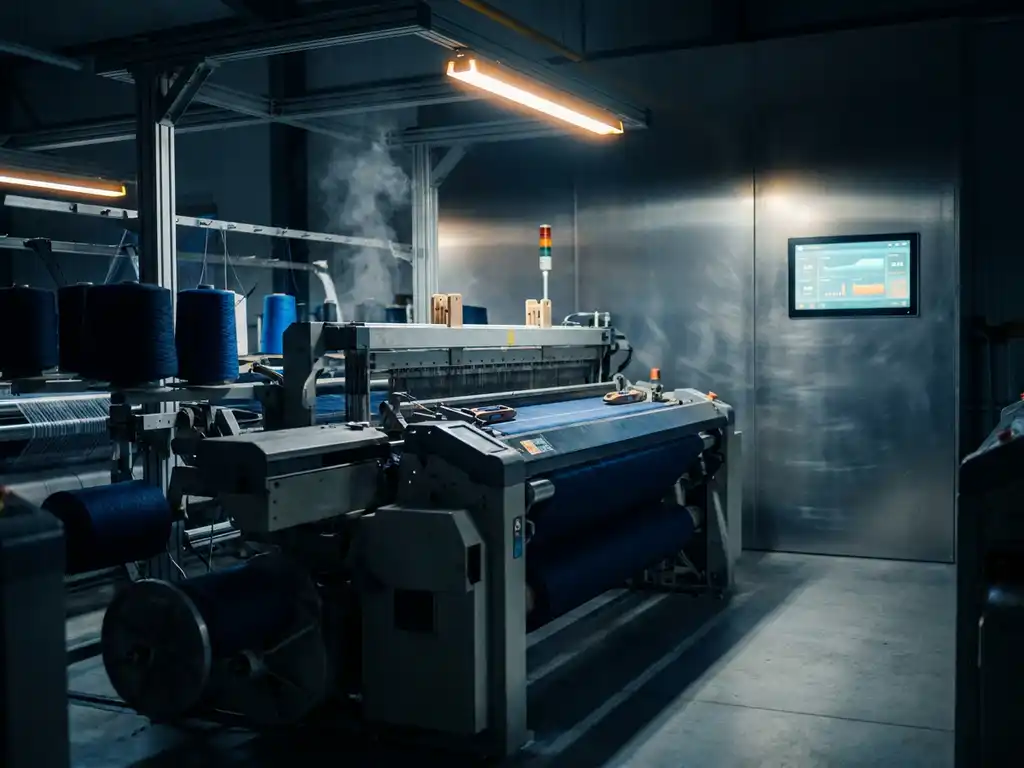
Yes, AI can significantly reduce energy consumption in textile factories. By using machine learning and smart sensors, machines, air conditioning systems, and production processes can be controlled so that energy is used only when it is actually needed. The following questions explain how this works in practice and what you, as a textile business owner, need to do to benefit from it.
How much energy does a textile factory typically consume?
A textile factory is one of the most energy-intensive production facilities in existence. Depending on the level of vertical integration and the stage of the production process, a large portion of energy consumption is attributable to heat, compressed air, lighting, and the operation of looms, knitting machines, or finishing equipment. Facilities involved in wet finishing—that is, dyeing and finishing—consume particularly large amounts of energy because water must be heated and chemicals activated there.
Specifically, this means that in many textile plants, energy is one of the largest cost categories after labor and materials. Fluctuations in capacity utilization, outdated machinery, and a lack of measurement technology result in a significant portion of this energy simply being wasted—for example, through idling, inefficient drives, or uncontrolled heat loss. This is exactly where AI-powered energy optimization comes into play.
What AI methods are used to reduce energy consumption in production?
In textile production, three AI methods in particular are used to reduce energy consumption: predictive algorithms for load forecasting, machine learning for pattern recognition in consumption data, and rule-based AI systems for automated machine control. These methods can be combined and implemented in stages.
Predictive Load Forecasting
Predictive models analyze historical consumption data and production schedules to predict when specific machines will require energy and how much. Based on this information, production can be planned to avoid peak loads, which has a direct impact on energy costs, since many rate plans charge more for peak loads.
Pattern Recognition and Anomaly-Based Control
Machine learning identifies patterns in energy consumption that remain invisible to humans. For example, an algorithm can determine that a particular machine draws significantly more power just before it malfunctions than it does during normal operation. This insight enables predictive maintenance and prevents inefficient operation before it becomes costly.
How does AI detect energy waste in real time?
AI detects energy waste in real time by continuously analyzing sensor data from the production facility and comparing it to a reference model. If actual consumption deviates from the expected value, the system immediately triggers an alarm or automatically intervenes in the control system.
This requires sensors on machines, compressors, ventilation systems, and lighting systems that send their readings to a central platform at short intervals. The AI processes this data and can, for example, detect that a compressed air system is still running outside of production hours, that a drive is operating inefficiently under partial load, or that an air conditioning system is struggling against an open warehouse door.
It’s important to note that AI learns over time. The longer the system runs, the more accurate its understanding becomes of what constitutes normal consumption and what constitutes actual waste. This continuous learning sets AI systems apart from simple threshold alarms, which remain static and fail to recognize patterns.
What savings can realistically be achieved through AI in textile factories?
Realistic energy savings achieved through AI in textile factories range from 10 to 30 percent of previous consumption, depending on the initial situation. This is not a guarantee, but rather an empirical figure based on data from various industrial facilities, which depends heavily on how inefficient the initial conditions are and how consistently the AI recommendations are implemented.
Businesses that have not previously had a systematic energy monitoring system often achieve significantly greater savings in the first year alone than businesses that have already implemented optimization measures. Experience shows that particularly high savings potential can be found in:
- Compressed air systems that frequently experience leaks and operate when not in use
- Heating and Air Conditioning Systems in Large Production Halls
- Lighting that is not controlled according to need
- Machines Idling Outside of Shift Hours
It is important to keep expectations realistic: AI optimizes, but it does not replace fundamental investments in new, more efficient machines. It gets the most out of what is already available.
What does a textile company need to use AI for energy efficiency?
To use AI for energy efficiency, a textile company needs three things: measurement data, a platform to process that data, and clear responsibilities within the organization. Without measurement, there is no basis for optimization.
Specifically, this involves the following steps:
- Setting up an energy measurement system: Install sensors and meters on the relevant devices that provide data in a machine-readable format.
- Centralize data: Set up a digital platform that collects, stores, and makes measurement data available for analysis. This can be a specialized software solution or an existing ERP system with a monitoring module be.
- Training AI models: Based on the collected data, develop or implement algorithms that recognize patterns and derive recommendations for action.
- Clarify responsibilities: Designate a person or team to regularly review the AI analyses and implement actions. AI does not operate autonomously; it needs people to respond to its findings.
Many textile companies underestimate the second step. Without structured production and consumption data, it is impossible to make effective use of AI. A solid Digital Database in Textile Production is therefore the most important prerequisite.
Is AI-powered energy optimization also worthwhile for small textile companies?
Yes, AI-powered energy optimization is worthwhile even for small textile companies—but only if you start off on the right foot. A company with ten employees doesn’t need a complex AI system with its own data center. Simple, cloud-based solutions for energy data collection and analysis are affordable today and can be set up quickly.
The key for small businesses lies in a modular approach: first measure, then analyze, then optimize. By starting with a manageable pilot project—such as focusing solely on the compressed air system or the lighting—you can quickly see initial results and justify the investment before expanding the system.
In addition, energy costs in Europe are rising due to structural factors, and regulatory requirements for energy efficiency and sustainability reporting are increasing. Companies that start measuring their energy consumption now will be better positioned in 2026 and beyond to meet these requirements and control costs. For small businesses, this is no longer a luxury but a key competitive factor.
How update texware Helps Optimize Energy Use in Textile Production
Here at update texware, we know that energy optimization isn’t possible without a data foundation. That’s why our portfolio of solutions provides exactly the foundation that textile companies need to implement AI-driven energy efficiency step by step:
- texware/Monitoring, It collects operational data in real time and reveals consumption patterns that were previously hidden.
- texware/MES manages production so that machines run only when they are needed, thereby reducing unnecessary energy consumption during idle time.
- texware/DeepSee analyzes the collected data and provides concrete insights that you can use to make informed decisions.
- texware/ERP It integrates all business units and ensures the data consistency required for meaningful AI analyses.
We have hands-on experience in the textile industry and understand which processes at which stages of production consume the most energy. You don’t need to explain to us how a weaving mill or a finishing plant works. Get in touch now and let's work together to identify where the greatest potential for savings lies in your business.
Related Articles
- What are the most common causes of high energy consumption in textile factories?
- How does AI improve production planning in textile companies?
- How can you identify hidden energy waste in textile production?
- What data is needed for predictive maintenance on textile machines?
- Can energy monitoring extend the service life of machinery in a textile plant?