
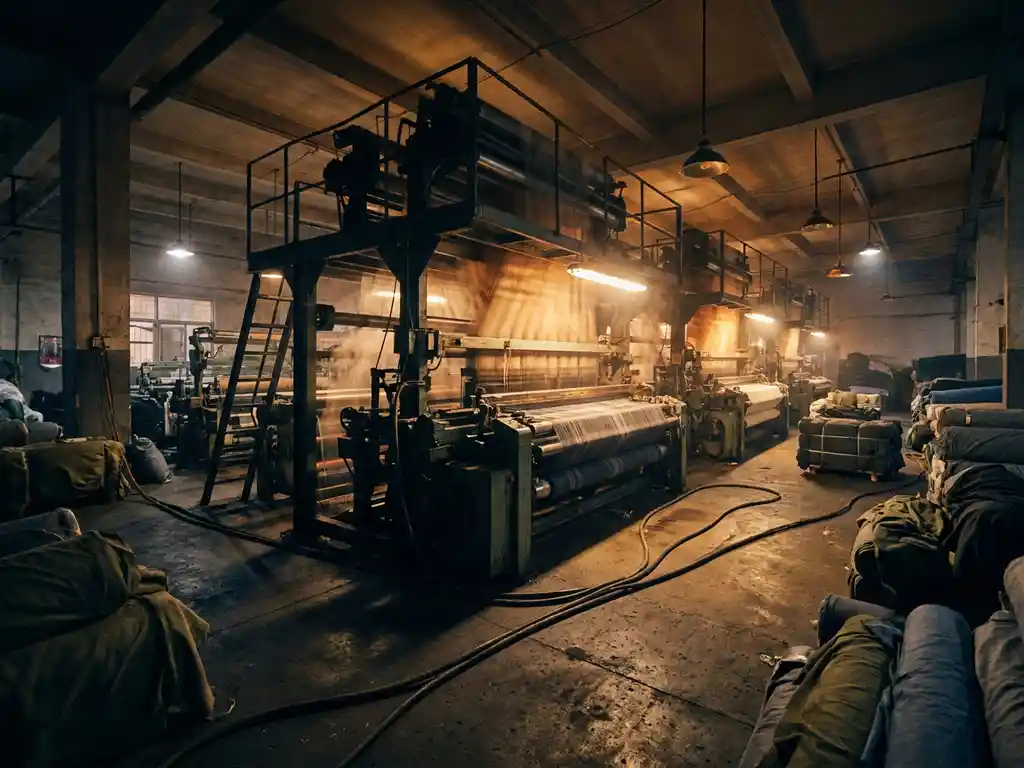
The most common causes of high energy consumption in textile factories are energy-intensive production processes such as dyeing, drying, and finishing, combined with outdated machinery, poor building insulation, and inefficient compressed air systems. Added to this is uncoordinated production planning, which leads to downtime and unnecessary idle periods. This article shows you which factors drive energy consumption in textile production the most and what specific steps you can take to address them.
Which production processes consume the most energy in textile factories?
The biggest energy consumers in a textile factory are thermal processes: dyeing, bleaching, drying, setting, and finishing require enormous amounts of heat and steam. In many factories, these process steps account for more than half of total energy consumption. Added to this are mechanical processes such as weaving, knitting, and spinning, which continuously require electrical power.
Wet processing, in particular, is a critical area: Water must be heated, maintained at a certain temperature, and then cooled again. If this heat is not recovered, a large portion of the energy used is simply wasted. Drying systems, too, often consume significantly more energy than necessary because temperatures are set at a fixed level rather than being regulated according to actual needs.
For companies along the textile value chain It’s worth conducting a process analysis first: Which systems are running, when, for how long, and at what energy cost? Only by knowing this can you make targeted savings.
Why are outdated machines a major driver of high energy costs?
Outdated machines consume significantly more energy than modern equipment because they operate at lower efficiency levels, lack smart controls, and often do not offer the ability to recover energy. A ten- or twenty-year-old weaving machine or dyeing system can easily consume 20 to 40 percent more energy than a current model.
The problem lies not only in the technology itself, but also in the lack of monitoring. Older machines often run with fixed settings, without any operational data being recorded. No one notices when a system is operating inefficiently because there are no benchmark values. Modern machines, on the other hand, provide real-time data that shows when a device is idling or drawing an unusually high amount of power.
Of course, immediately replacing a company’s machinery is often not realistic for small and medium-sized businesses. It makes more sense to proceed step by step: First, identify the equipment that consumes the most energy and runs the most frequently. Modernize these first—or at least equip them with monitoring systems—to make their actual energy consumption visible.
How do poor insulation and heat loss affect energy consumption?
Poor building insulation and uninsulated pipes result in the continuous loss of generated heat before it reaches the actual point of use. In many older factory buildings, a significant portion of the heating energy escapes through the roof, walls, and drafty windows. This means that the heating system runs at full capacity around the clock just to compensate for these losses.
Uninsulated steam lines, which are common in textile finishing, are particularly problematic. Steam that cools on its way from the source to the equipment must be reheated. This consumes energy without providing any benefit to production. Doors and gates, which are often left open in production halls, also cause significant heat loss.
A simple thermographic analysis can reveal where the greatest heat losses occur in a building or in piping. This measure is relatively inexpensive and provides concrete starting points for insulation measures that often pay for themselves within just a few years.
What role do compressed air and cooling systems play in energy consumption?
Compressed air systems are among the most energy-intensive auxiliary systems in textile factories, and at the same time, they are often the least efficient. Leaks in compressed air lines, excessively high operating pressure, and inefficient compressors can result in a significant portion of the generated compressed air being lost without being used. Cooling systems cause similar problems when they run continuously at full load even though demand fluctuates.
Compressed Air Systems: Leaks and Excessive Pressure
In many textile plants, compressed air demand is met by maintaining a uniformly high pressure level, even though individual consumers require significantly less pressure. Every bar of additional pressure results in a noticeable increase in the compressor’s energy consumption. Regular leak tests and zone-by-zone pressure regulation can significantly reduce energy consumption in this area.
Cooling Systems: Demand-Based Control Instead of Continuous Operation
In many factories, cooling systems operate around the clock at a constant level, even when production is halted at night or on weekends. Speed-controlled pumps and fans, along with an intelligent control system that adjusts to actual cooling demand, can significantly reduce the electricity consumption of cooling systems.
How does production planning affect energy consumption at a textile factory?
Poorly coordinated production planning directly increases energy consumption because machines idle more often, equipment is started up unnecessarily early, and setup times lead to short, unproductive operating periods. Sequencing orders poorly not only slows down production but also makes it more expensive.
Here’s a concrete example: When dyeing lines are switched over multiple times a day for different colors and materials, this results in many short heating phases that, taken together, consume more energy than an optimized sequence with fewer temperature changes. The same applies to drying systems that are kept at operating temperature even when no product is currently passing through them.
Well-thought-out production planning that incorporates energy consumption as a planning criterion can be of significant help here. This means: grouping orders based on process similarity, coordinating machine startups, and consistently minimizing downtime. Digital planning tools make this possible by suggesting energy-optimized order sequences.
What are the first steps toward reducing energy consumption in a textile factory?
The first step toward reducing energy consumption in a textile factory is transparency: You need to know who is consuming how much energy and when. Without this data, any measure taken is a shot in the dark. Only when consumption data is available can meaningful priorities be set and savings be measured concretely.
In practice, we recommend the following approach:
- Implementing energy metering: Install consumption meters on key equipment and in key areas to track actual consumption.
- Identifying vulnerabilities: Which machines, processes, or areas of the building consume a disproportionate amount of energy?
- Implement quick measures: Fix compressed air leaks, improve insulation, and optimize machine uptime. These measures are inexpensive and produce quick results.
- Rethinking Production Planning: Sequence jobs for optimal energy efficiency and reduce idle time.
- Planning Investments: Use the data to determine which machines or systems should be replaced in the medium term.
It is important to view this process as an ongoing task, not as a one-time project. Energy efficiency in textile production is not a goal to be achieved once and for all, but rather a continuous process of improvement.
How texware helps reduce energy consumption in textile production
Many of the causes of high energy consumption described above have a common root: a lack of data transparency and uncoordinated planning. This is exactly where we come in with our Software Solutions for the Textile Industry to.
With texware/ERP and its complementary modules, we help textile companies make their processes transparent and manage them effectively:
- texware/Monitoring, It collects operational data in real time and provides transparency regarding machine utilization, operating times, and downtime—the foundation for any energy optimization.
- texware/MES controls production at the machine level and helps minimize setup times and sequence orders in a way that optimizes the process.
- texware/Planboard provides a graphical production control console that allows you to plan job sequences for optimal energy efficiency before the machines even start up.
- texware/DeepSee provides business intelligence reports that allow you to analyze energy consumption over time and measure savings in concrete terms.
We have more than 40 years of experience in the textile industry and know how production really works in dyeing, weaving, finishing, and garment manufacturing. You don’t have to explain to us what a dye batch is or why setup times in weaving are so critical. This knowledge is built into our software.
If you would like to know how we can specifically support your business, Please feel free to contact us. Together, we'll identify where your greatest opportunities for improvement lie.
Related Articles
- Can an MES system improve energy management in production?
- What are the benefits of AI in manufacturing?
- When Is AI-Based Production Control Worth It in a Textile Manufacturing Facility?
- When Is Energy Monitoring Worth It for Small Textile Companies?
- How do you get started with energy monitoring in textile production?