
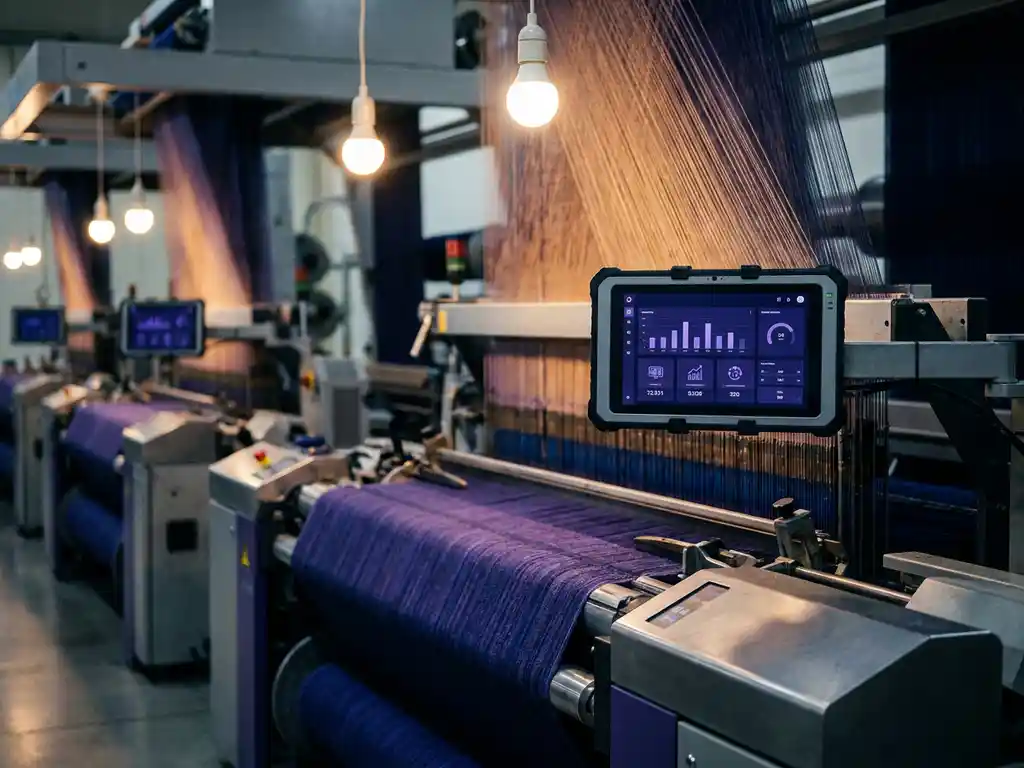
AI-powered production control analyzes manufacturing data in real time, identifies patterns, and automatically makes decisions regarding order planning, machine utilization, and quality assurance. Unlike traditional systems, AI does not wait for input but acts proactively based on machine-learning algorithms. Those in the textile industry who use AI in manufacturing gain a control layer that continuously improves. The following sections provide concrete and practical answers to the most important questions on this topic.
What makes AI-powered production control different from traditional MES systems?
Traditional MES systems collect and document production data. AI-powered systems do the same, but they also analyze this data independently, identify correlations, and derive recommendations for action or automated interventions from them. The difference lies not in the volume of data, but in what the system does with it.
A classic MES system shows you that a machine is running slower than planned. An AI system also identifies why this is happening, compares the pattern with historical data, and suggests adjusting the order of the jobs before a bottleneck occurs. That’s the practical difference: reactive versus proactive.
In textile manufacturing, this means, specifically, that instead of shift supervisors constantly monitoring key performance indicators and intervening manually, the system takes over part of this monitoring and decision-making work. People remain responsible for strategic decisions, while AI handles the ongoing operational monitoring.
What production data does an AI system need in textile manufacturing?
An AI system in textile manufacturing primarily requires structured, continuous data from ongoing production: machine runtime, reasons for downtime, scrap rates, setup times, material consumption, and order turnaround times. The more complete and consistent this data is, the better the AI performs.
In addition, the following data sources are particularly relevant for textile companies:
- Yarn Quality Data: Fineness, twist, and tear strength from quality testing
- Weaving and Knitting Data: Stitch density, number of stitches, thread tension
- Finishing parameters: Temperatures, dwell times, chemical quantities
- Order data from the ERP system: Delivery Dates, Lot Sizes, Material Items
- Machine sensor data: Vibration, Energy Consumption, Operating Hours
It is important that this data not be stored in isolation across different systems. Only when machine, order, and quality data are integrated can an AI system identify genuine correlations and respond appropriately.
How exactly does AI plan production orders in the textile industry?
AI plans production orders by simultaneously taking into account delivery dates, machine capacities, material availability, and historical production times, and uses this information to calculate an optimized sequence. This is not a one-time process but occurs continuously, so that the plan is automatically adjusted in the event of disruptions.
In practice, this is what it looks like at a textile factory:
- The system tracks all open orders, including their due dates and priorities, from the ERP.
- It checks in real time which machines are available and how long setup procedures take for specific product changes.
- It calculates the optimal order sequence that minimizes setup times and meets deadlines.
- If a machine breaks down or a delivery date changes, the system immediately recalculates the schedule.
Especially in the textile industry, where color changes, yarn changes, and pattern changes result in significant setup times, this type of planning yields noticeable efficiency gains. A system that automatically optimizes color sequences saves valuable production time every day.
What problems does AI most commonly solve in textile production?
In textile production, AI primarily solves three recurring problems: unplanned machine downtime through predictive maintenance, quality defects through early detection of deviations, and inefficient planning through automatic optimization of the order sequence.
Avoid Unplanned Downtime
By analyzing sensor data, an AI system detects wear patterns before a machine breaks down. This gives the maintenance team time to take preventive action rather than reacting under time pressure after a breakdown. In the textile industry, where weaving and knitting machines require a great deal of maintenance, this represents a tangible economic advantage.
Detect Quality Deviations Early
AI can compare quality data from ongoing production with target values and immediately report deviations before entire batches become scrap. This helps reduce scrap and rework, especially in finishing processes, where temperature fluctuations or chemical quantities directly affect product quality.
When is a textile company ready for AI-powered production control?
A textile company is ready for AI-supported production control if it already collects structured digital production data, uses an operational ERP system, and has standardized its core processes to the extent that deviations can be measured at all. Without this foundation, AI lacks a meaningful data set.
Specifically, this means that anyone still working with paper timesheets, spreadsheets, and manual time tracking should first invest in digital infrastructure. The order in which you do this is important:
- First, set up digital data collection (manufacturing data collection, MES)
- Then integrate ERP and production data
- Then, introduce AI features step by step, starting with a specific use case
Small and medium-sized textile companies don't have to tackle everything at once. A good place to start, for example, is with automated detection of machine downtime or AI-powered planning for a single production stage. From there, the system can be expanded step by step.
How does AI-powered production control integrate with existing ERP systems?
AI production control integrates with existing ERP systems via standardized interfaces. It retrieves order data, material inventories, and schedules from the ERP system, processes them together with real-time data from production, and feeds optimized planning results back into the ERP system. The ERP data remains the primary data source throughout this process.
Technically speaking, this works via APIs or direct database connections. In practice, this means that for a Textile Company: The ERP system remains the central system for orders, customers, and finances. The AI layer sits on top of it and uses this data to optimize production decisions without requiring employees to enter data twice.
What to Keep in Mind During Integration:
- A clear definition of which system takes precedence in the event of conflicts
- Real-time data exchange instead of daily batch transfers
- User interfaces that present planning results in an easy-to-understand way
- Option for manual intervention when the system lacks context for a decision
Here's how update texware supports you with AI-powered production control
Here at update texware, we’ve been developing software exclusively for the textile industry for more than 40 years. That means you don’t have to explain to us how color changes, yarn changes, or finishing processes work. Our team is familiar with these processes and has incorporated them into our solutions.
To help you get started with AI-powered manufacturing, we offer the following building blocks:
- texware/ERP: The central system for orders, materials, and planning, which serves as the database for all other modules
- texware/MES: Production control with real-time operational data collection directly at the machine
- texware/Monitoring: Digitalization platform for the collection and analysis of machine data
- texware/Planboard: Graphical production control console for the visual planning and optimization of job sequences
- texware/DeepSee: Business Intelligence for Analyzing Production and Quality Data
Our modular structure allows you to get started step by step: You begin where the need is greatest and expand the system as your business grows. If you’d like to know what the next logical step is for your business, Please contact us directly and we'll look at it together.
Related Articles
- What is AI-powered textile production, and how does it work?
- How does AI improve production planning in textile companies?
- How do you get started with AI-driven manufacturing in a medium-sized textile company?
- How can you identify hidden energy waste in textile production?
- When Is Energy Monitoring Worth It for Small Textile Companies?