
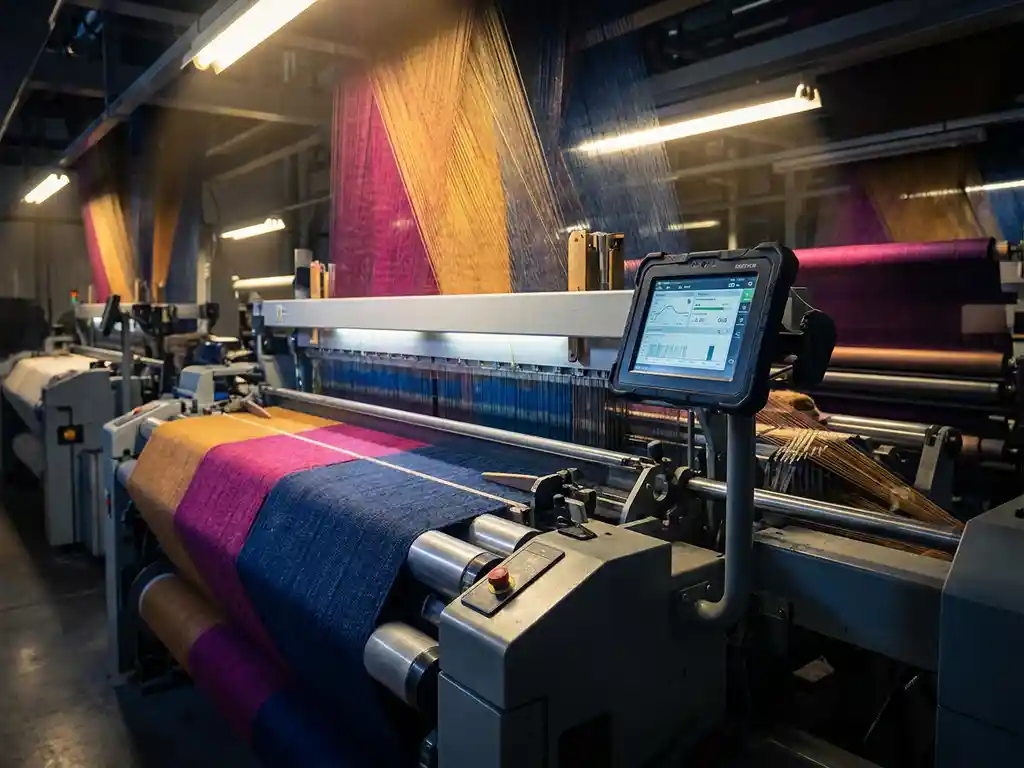
AI in the textile value chain works like this: Algorithms analyze production, purchasing, and quality data in real time, identify patterns, and provide specific recommendations for action. This saves time, reduces errors, and helps textile companies respond more quickly to market changes. In this article, each question highlights a different aspect of the topic, ranging from production planning to practical first steps for small businesses.
What roles does AI play throughout the textile value chain?
AI handles tasks throughout the textile value chain, such as demand forecasting, automated quality control, supplier selection, production management, and inventory management. In doing so, it processes large volumes of data from various business units simultaneously and delivers results that would be difficult or extremely time-consuming to achieve manually.
Specifically, this means that an AI module in the ERP system can analyze ordering patterns from past periods and use that information to determine when which yarn or raw material is needed and in what quantity. Another module monitors machine data in production and issues an alert before a malfunction occurs. Yet another evaluates incoming orders based on profitability and capacity utilization.
AI does not replace skilled workers; rather, it provides them with better information. Anyone working in the textile industry knows how complex the interdependencies are between raw materials, production, delivery dates, and customer requirements. That is exactly where AI comes in: it makes this complexity manageable.
How does AI support production planning in textile manufacturers?
AI supports production planning in textile manufacturers by automatically balancing order volumes, machine capacities, material availability, and delivery dates and suggesting optimized production schedules. This reduces the planning workload and minimizes bottlenecks.
Traditionally, production planning in many textile factories still relies on spreadsheets or the experience of individual employees. This works to a certain extent, but quickly reaches its limits when order volumes fluctuate, machines break down, or raw materials arrive late. AI-powered planning systems respond to such events in real time and automatically adjust the schedule.
Another advantage: AI can identify seasonal demand patterns and proactively manage production. Instead of always reacting to current orders, textile companies can plan their capacity more effectively and reduce overtime or idle time. This is particularly relevant for small and medium-sized enterprises (SMEs), which do not have large buffers.
Systems such as a graphical production control console They present this plan in a clear and organized manner, making it understandable to the entire team—not just the planning department.
What does AI-powered quality control mean in the textile industry?
AI-powered quality control in the textile industry means that camera systems and sensors detect weaving defects, color variations, broken yarns, or surface defects in real time, eliminating the need to inspect each roll manually. The AI learns from examples and becomes more accurate over time.
Traditional fabric inspection is labor-intensive and prone to errors, especially during long shifts or when throughput is high. AI systems continuously scan textile fabric and automatically flag areas of concern. This speeds up the inspection process and makes it reproducible, regardless of the inspector’s performance on any given day.
For textile companies looking to adopt AI-powered quality control, the first step is often a digital inspection process that systematically records and stores inspection results. Only with this data can AI be effectively trained. Companies that still record inspection findings on paper today should start there.
How does AI help with purchasing and inventory management in the textile retail industry?
AI helps with purchasing and inventory management in the textile retail industry by analyzing inventory levels, consumption history, and delivery times, and automatically generating order recommendations based on this data. This helps prevent both excess inventory and stockouts.
In the textile retail industry in particular, inventory costs are a major expense. Those who order too much tie up capital and risk being stuck with leftover inventory. Those who order too little lose orders or have to buy more at a higher cost. AI systems analyze historical sales data, current order volumes, and external factors such as seasonality, and use this information to recommend the optimal order quantity.
In addition, AI can help evaluate suppliers: Who delivers on time? Who has the lowest error rate? Who offers the best value for money on which materials? These analyses run in the background and are available to the purchasing department at the push of a button, instead of getting buried in reports for weeks on end.
Learn more about how digital solutions are transforming the entire textile value chain For more information on how we can support you, see our overview of industry solutions.
What requirements must a textile company meet to use AI?
A textile company needs three things above all else to implement AI: a structured database, an integrated system that consolidates data from various areas, and clearly defined processes on which AI can build. Without this foundation, AI cannot deliver reliable results.
That sounds like a lot, but most companies are closer to achieving it than they realize. Companies that use an ERP system already have a central database. Those that digitally record orders, inventory levels, and production data have laid the groundwork for AI analytics. The next step is to structure this data and make it accessible.
Data quality is the foundation
AI is only as good as the data it works with. Missing values, inconsistent terminology, or duplicate entries lead to incorrect recommendations. Before activating AI modules, it’s worth cleaning up the master data and standardizing processes.
Integration Instead of Isolated Solutions
AI needs access to as many relevant data points as possible. An AI module that only accesses production data but does not have access to order data cannot make meaningful planning recommendations. That is why an integrated ERP system that connects all areas is the most important technical prerequisite for AI in textile production.
How can small textile companies get started with AI without risking high costs?
Small textile companies can get started with AI by beginning with a specific, well-defined use case—for example, automated order recommendations in procurement or simple anomaly detection in production. This keeps the initial steps manageable and quickly shows whether the approach works.
The most common mistake is to treat AI as a major transformation project. This puts too much strain on the organization and the budget. A step-by-step approach makes more sense: first digitize, then automate, and finally optimize with AI. Anyone still working with spreadsheets should first switch to an ERP system before AI functions can be used effectively.
Many modern ERP systems for the textile industry already offer AI features as integrated modules that can be enabled individually. This means no separate AI project and no complex integration—just an extension of the existing system. This makes AI in textile production accessible even to smaller businesses.
Cloud-based solutions further lower the barrier to entry because they do not require a dedicated IT infrastructure and offer predictable monthly costs. For startups and growing SMEs in the textile industry, this is often the most practical way to get started quickly and without a high investment risk.
How update texware Supports the Use of AI in Textile Production
Here at update texware, we have been developing software exclusively for the textile industry for more than 40 years. That means we understand the processes, the challenges, and the language of the industry—without you having to explain to us how textile production works.
Our core product, texware/ERP, serves as the integrated data foundation upon which AI functions can be meaningfully built. Complementary modules such as texware/MES for production control, texware/DeepSee for business intelligence, and texware/Monitoring for operational data collection lay the groundwork for data-driven decisions that make AI possible in the first place.
- Modular design: You start with what you need now and expand step by step
- Cloud, data center, or on-premises: You choose the deployment option that best suits your IT needs
- Industry-specific process expertise: our consultants come from the textile industry
- Transparent cost structure: no hidden pricing model, no overengineering
- Future-proof platform: including topics such as textile recycling and circular processes
If you'd like to know how AI can work in your business in practical terms, Please contact us directly. We'll show you which approach makes the most sense for your business.
Related Articles
- What is AI-powered textile production, and how does it work?
- How does AI reduce errors in textile order processing?
- How do you get started with AI-driven manufacturing in a medium-sized textile company?
- How does AI help small textile businesses with digital transformation?
- Why is AI-driven manufacturing so important for the textile value chain?