
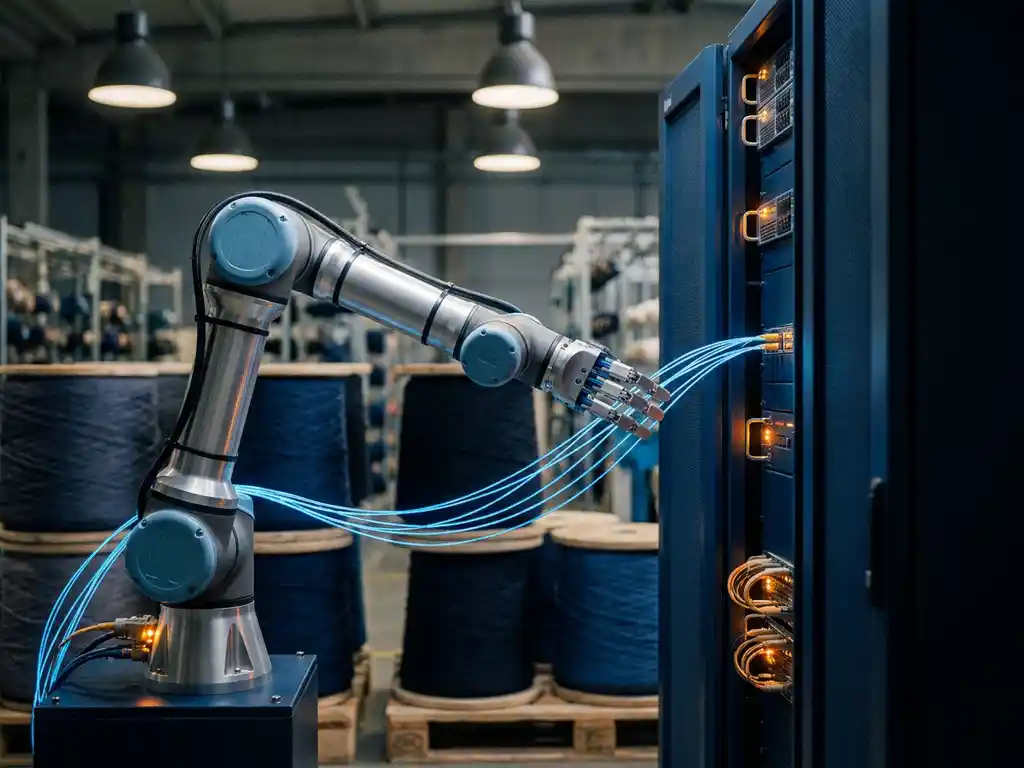
AI can be integrated into existing ERP systems by either activating the ERP vendor’s native AI modules or connecting external AI solutions via interfaces. Both approaches work, but they require a clean, structured database within the ERP system. Which approach is right for your company depends on your system, your processes, and your specific manufacturing goals. The following sections answer the most important questions about AI-driven manufacturing and ERP integration.
What AI features are already available in modern ERP systems?
Today, modern ERP systems offer a wide range of AI features directly within the system: automatic demand forecasting, intelligent replenishment planning, anomaly detection in production, predictive maintenance alerts, and automated quality checks. These functions run in the background and provide recommendations or alerts without requiring users to take active action.
AI-powered forecasting models are particularly common in materials management. The system analyzes historical order data, seasonal patterns, and delivery times, and uses this information to automatically suggest optimized order quantities. This saves time and significantly reduces inventory costs.
AI capabilities are also becoming increasingly important in the area of production planning. Algorithms identify bottlenecks early on, suggest alternative machine schedules, and dynamically adjust production plans when order volumes change. This is particularly relevant in the textile industry, where last-minute order changes are a daily occurrence.
How do native AI modules differ from external AI solutions?
Native AI modules are integrated directly into the ERP system and access all company data without requiring additional interfaces. External AI solutions are standalone applications that connect to the ERP via APIs or middleware. The main difference lies in data availability and the effort required for integration.
Native AI Modules: Advantages and Limitations
Native modules have the advantage that they can immediately access all relevant data in the ERP system without having to first export, transform, and then re-import the data. Setup is generally simpler, and the vendor ensures compatibility during updates. The downside: The functionality is often limited to what the ERP provider has developed.
External AI Solutions: Flexibility at a Higher Cost
External AI solutions are more flexible and often more specialized—for example, in image processing for quality control or in complex optimization algorithms for production planning. To use them, you’ll need a stable interface, regular data synchronization, and someone to oversee the technical integration. The effort involved is greater, but the benefits can be significantly greater for specific requirements.
What kind of data foundation does an ERP system need for AI to work effectively?
For AI to function effectively in manufacturing, the ERP system needs complete, consistent, and historical data. At least two to three years of order, production, and material data in a structured format is a realistic minimum requirement. Missing or inconsistent data leads to inaccurate forecasts and poor recommendations.
Specifically, this means: product records must be accurately maintained, bills of materials must be up to date, production times must be tracked, and inventory levels must be accurate in real time. AI is not a magic bullet that can compensate for poor data management. Rather, it amplifies what’s already in the system: good data leads to good results, while incomplete data leads to unreliable recommendations.
So anyone considering AI integration should first take an honest look at their own data quality. This is often the underestimated first step on the path to digital manufacturing.
How does the technical integration of AI into an existing ERP system work?
The technical integration of AI into an existing ERP system typically proceeds in four phases: analysis of the data foundation, selection of the AI solution, integration via interfaces, and a phased rollout with pilot areas. No reputable provider recommends a complete overhaul all at once.
- Analysis phase: Review the database, document processes, and define specific use cases.
- Selection: Native modules or an external solution? What interfaces does the existing ERP system offer?
- Access: Establish API connections, perform data mapping, and run test runs.
- Pilot Operation: Start by using AI in one area, measure the results, and adjust the models.
- Rollout: Gradual expansion to other production areas following a successful pilot phase.
It is important to involve employees from the very beginning. AI recommendations must be understood and accepted so that they are actually used in day-to-day work. Technical integration alone is not enough.
Which areas of production in the textile industry benefit the most from AI?
In the textile industry, production planning, quality control, materials management, and maintenance management benefit the most from AI support. This is because these areas generate large amounts of data and, at the same time, rely heavily on the accuracy of forecasts.
- Production Planning: AI optimizes machine utilization, identifies bottlenecks early on, and schedules jobs more efficiently.
- Quality Control: Image processing systems using AI detect web defects, color variations, or surface defects faster and more reliably than manual inspection.
- Materials Management: Forecasting models calculate demand based on order history and seasonality and reduce excess inventory.
- Maintenance: Predictive maintenance approaches use machine data to identify when maintenance is needed before failures occur.
Especially for the textile production With its diverse production stages—from yarn processing to garment manufacturing—KI unlocks concrete efficiency gains that directly translate into cost savings and on-time delivery.
What should textile companies clarify before integrating AI into their ERP systems?
Before integrating AI into their ERP systems, textile companies should clearly answer three questions: What specific problem is AI supposed to solve? Is the necessary data available and clean enough? And who within the company is responsible for its operation and further development? Without clear answers to these questions, the integration will be costly and fail to deliver value.
In addition, it’s a good idea to clarify the following points in advance:
- What interfaces does the existing ERP system offer?
- Is the ERP provider ready to support AI integrations?
- What internal resources are available for implementation and operation?
- What are the costs for licensing, integration, and ongoing operations?
- Is there a pilot area where you can get started with a manageable level of risk?
A modular approach is almost always a better choice than a large-scale implementation project all at once. This allows you to measure results early on and adjust your approach as needed.
How update texware Helps with AI Integration in Textile Manufacturing
Here at update texware, we’ve been developing software exclusively for the textile industry for more than 40 years. That means when you talk to us about AI-driven manufacturing, you don’t have to explain how your industry works. We’re familiar with the processes—from yarn production to finishing to garment manufacturing—from our customers’ day-to-day operations.
With texware/ERP as the foundation and supplementary modules such as texware/MES, texware/Monitoring, and texware/DeepSee, we offer you concrete building blocks for data-driven manufacturing:
- texware/MES It collects production data in real time, thereby creating the data foundation that AI functions require.
- texware/Monitoring, digitizes operational data and provides transparency into machine status.
- texware/DeepSee analyzes your company's data and provides business intelligence reports that serve as the basis for AI-driven decisions.
- texware/Planboard supports graphical production planning and can be combined with AI recommendations.
Whether you're just getting started with an ERP system or want to enhance your existing system with AI capabilities, we'll guide you every step of the way. Talk to us and we'll work together to see what makes sense and is feasible for your company.
Related Articles
- What is meant by a circular economy in the textile industry?
- How does the water footprint affect sustainability in textile production?
- How can energy consumption in textile production be optimized by 2026?
- How does AI reduce errors in textile order processing?
- What data is needed for predictive maintenance on textile machines?